
Hermi Viljoen
Music and emotion are linked in a powerful way. People respond to music from a very early age, before words and language are developed, and this continues even towards the end of our lives, even when verbal abilities may be lost. Music also activates the logical and creative areas of the brain, providing people with dementia with multiple opportunities for cognitive and memory stimulation, emotional expression, movement and speech. Thus Music has the capacity to overcome physical and cognitive limitations and encourage engagement and interaction, offering a new form of communication to those suffering from dementia.
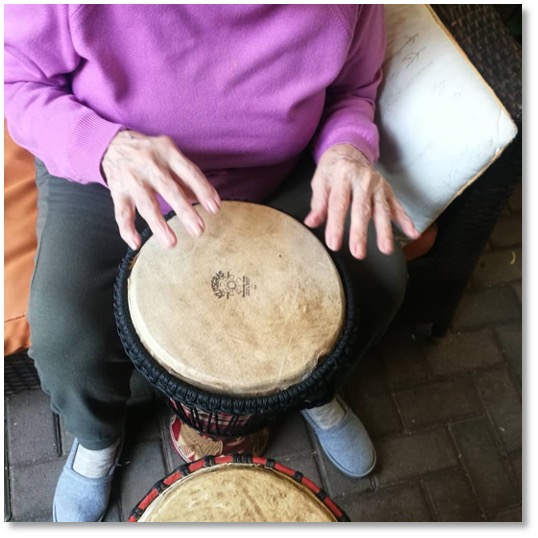
Sessions are very flexible and guided by the needs of the individual client. Sessions can be delivered with or without instruments, with accompaniment (either live or pre-recorded) and music listening.
What does Music Therapy offer clients with Dementia?
- Reduce agitation and promote positive changes in mood and emotional states.
- Offer non-pharmacological management of pain and discomfort.
- Stimulate the mind through reminiscence and creative self-expression, which helps to improve quality of life.
- Increase awareness of self and the environment.
- Help with reality orientation (time, place, person recognition).
- Aid attention and memory recall through singing familiar songs.
- Promote relaxation and stress management.
- Enhance social interaction and provide a sense of belonging.
- Provide an additional means of communication when the ability to talk and understand language has gone.
- Provide the client with a sense of control through the opportunity to engage in choice making.
- Provide sensory stimulation to encourage a response.
- Increase motivation and engagement during physical exercises.
Music Therapy is proven to be effective even for people who have not responded or are resistant to other treatment approaches. Music calms and sooths the mind and enhances cognitive processes. In the case of aphasia, singing can be a welcome release from the helplessness of communicating caused by difficulties with language. Music Therapy can help a person with dementia to maintain or improve their physical, mental, cognitive and psychological functions.
Music Therapy sessions can be facilitated in group and individual settings. Caretakers and family members are encouraged to attend the sessions. It is important to ensure that your music therapist is a board certified arts therapist with the Health Professions council of South Africa (HPCSA). This is to ensure you receive the highest quality music therapy services offered to you and your loved ones.
